What Foods Boost Weight Loss?
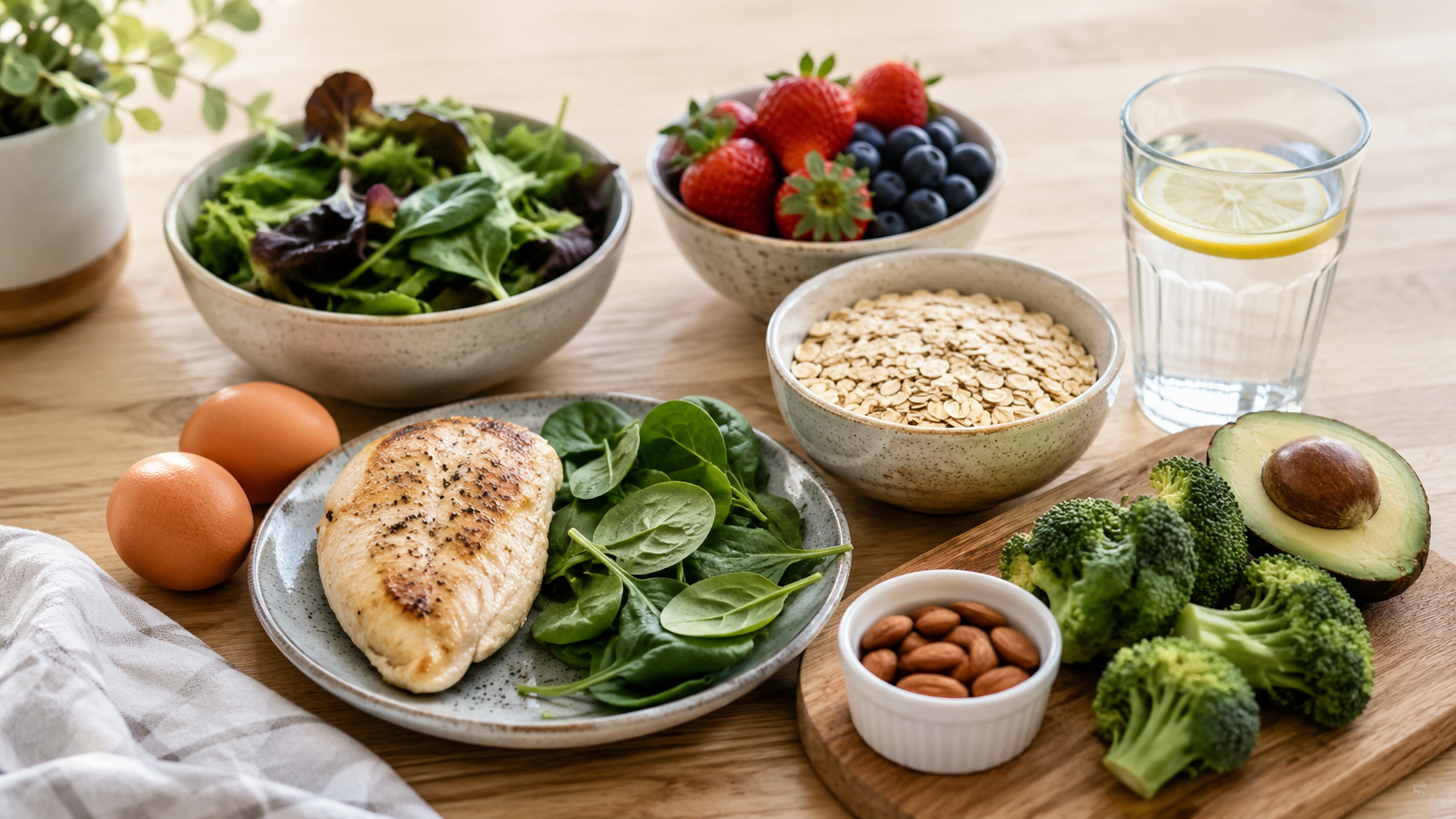
Simple, nourishing foods that actually support weight loss 🥗✨
Think protein, fibre, and whole ingredients that keep you fuller for longer—no extremes, just balance. #HealthyLiving #WeightLossFoods #Nutrition
What foods boost weight loss the most?
Foods that boost weight loss are high in protein, fibre, and water, helping you feel full on fewer calories. These foods reduce hunger hormones and naturally lower calorie intake without strict dieting.
Research shows that foods promoting satiety—like lean proteins, vegetables, and whole foods—help regulate appetite and reduce overeating, as outlined in this study on functional foods and satiety. The key principle is energy density: foods lower in calories per gram allow you to eat more volume while consuming fewer calories, a concept explained by the Mayo Clinic’s guidance on feeling full with fewer calories.
The NHS also emphasizes building meals around whole foods like vegetables, lean protein, and whole grains in their healthy eating for weight loss guide, rather than focusing on restriction alone. Lists of effective foods consistently include eggs, Greek yogurt, legumes, leafy greens, and lean meats, as summarized in this expert-reviewed food breakdown.
Best Foods for Weight Loss (and Why They Work)
What not to eat to lose weight
Avoid ultra-processed foods, sugary drinks, and refined carbohydrates, as they increase calorie intake without keeping you full. These foods make it easier to overeat and harder to maintain a calorie deficit.
Ultra-processed foods are strongly linked to weight gain because they are engineered to be hyper-palatable and easy to over-consume, as highlighted by the British Heart Foundation analysis on processed foods. These foods often lack fiber and protein, meaning they don’t trigger fullness effectively.
The NHS also advises limiting foods high in sugar and fat, especially sugary drinks, which add calories without satiety, in their weight loss nutrition guidance. Similarly, Harvard Health explains that refined carbs can spike blood sugar and increase hunger shortly after eating in their diet and weight loss overview.
How can you speed up weight loss naturally?
You can speed up weight loss by increasing protein intake, improving food quality, and maintaining a consistent calorie deficit. There are no shortcuts—consistency and satiety-driven eating matter most.
A 2023 review on dietary strategies confirms that sustainable weight loss comes from consistent eating patterns and food choices rather than extreme diets, as discussed in this PMC research on food choices and weight loss. Increasing protein intake, in particular, helps preserve muscle and reduce appetite.
Science-based guidance from the European Food Information Council reinforces that combining nutrient-dense foods with portion control is more effective than focusing on “fat-burning” foods.
From a real-world perspective, a consistent pattern seen in clinical settings is that patients who prioritize protein and structured meals tend to maintain weight loss more effectively than those relying on restrictive or inconsistent eating patterns. The biggest barrier is rarely knowledge—it’s adherence.
Does drinking water help with weight loss?
Yes, drinking water can support weight loss by reducing appetite and slightly increasing calorie burning. It also helps replace high-calorie drinks that contribute to weight gain.
Hydration plays a key role in appetite regulation. Drinking water before meals has been shown to reduce calorie intake, while proper hydration supports metabolic processes, as explained in Harvard Health’s weight management resources.
Water may also increase thermogenesis slightly, meaning your body burns a small number of extra calories during digestion and absorption. While not dramatic, this effect becomes meaningful when combined with reduced calorie intake from replacing sugary drinks.
What is the best breakfast for weight loss?
The best breakfast for weight loss is high in protein and low in refined carbs, helping control hunger throughout the day. Protein-rich breakfasts reduce cravings and improve calorie control later on.
Protein has a strong effect on satiety hormones, helping reduce hunger and stabilize energy levels, as shown in research on satiety and food intake. The NHS also recommends balanced breakfasts that include protein and fibre in their weight loss eating plan.
From personal experience, maintaining a mostly protein-based diet consistently leads to feeling fuller for longer, which naturally reduces snacking and overall calorie intake. This aligns with evidence that protein-rich meals improve adherence by making diets easier to sustain—not stricter.
Examples of effective breakfasts include eggs with vegetables, Greek yogurt with berries, or oats combined with protein sources.
What drinks are good for weight loss?
The best drinks for weight loss are water, green or black tea, and black coffee because they contain little to no calories. Replacing sugary drinks with these options significantly reduces daily calorie intake.
Sugary beverages are one of the easiest ways to consume excess calories without realizing it, which is why the NHS recommends limiting them in theirhealthy weight loss guidance.
Harvard Health also highlights that beverages like coffee and tea can support weight management when consumed without added sugar or cream, as explained in their diet and weight loss resources. The benefit comes less from “fat burning” and more from calorie replacement.
What dissolves belly fat fast?
No food can specifically dissolve belly fat—fat loss happens across the whole body through a calorie deficit. However, consistent healthy eating reduces visceral fat over time.
The idea of spot reduction is a common myth. Scientific consensus, including guidance from Harvard Health, confirms that fat is lost systemically, not from targeted areas.
Sustainable fat loss comes from long-term dietary patterns rather than specific “belly fat” foods. In practice, many individuals expect quick fixes, but real progress comes from consistent habits like protein intake, fiber consumption, and calorie control.
FAQ
Can you lose weight without dieting?
Yes, weight loss is possible by improving food quality and portion awareness without strict dieting. Focusing on protein, fiber, and whole foods naturally reduces calorie intake.
How quickly can you safely lose weight?
A safe rate is around 0.5–1 kg per week. Faster weight loss is often unsustainable and harder to maintain long term.
Are carbs bad for weight loss?
No, carbs are not inherently bad. Whole carbs like oats and vegetables support weight loss, while refined carbs can increase hunger.
Is intermittent fasting better than calorie control?
Intermittent fasting can help some people reduce calories, but total calorie intake remains the most important factor for weight loss.
